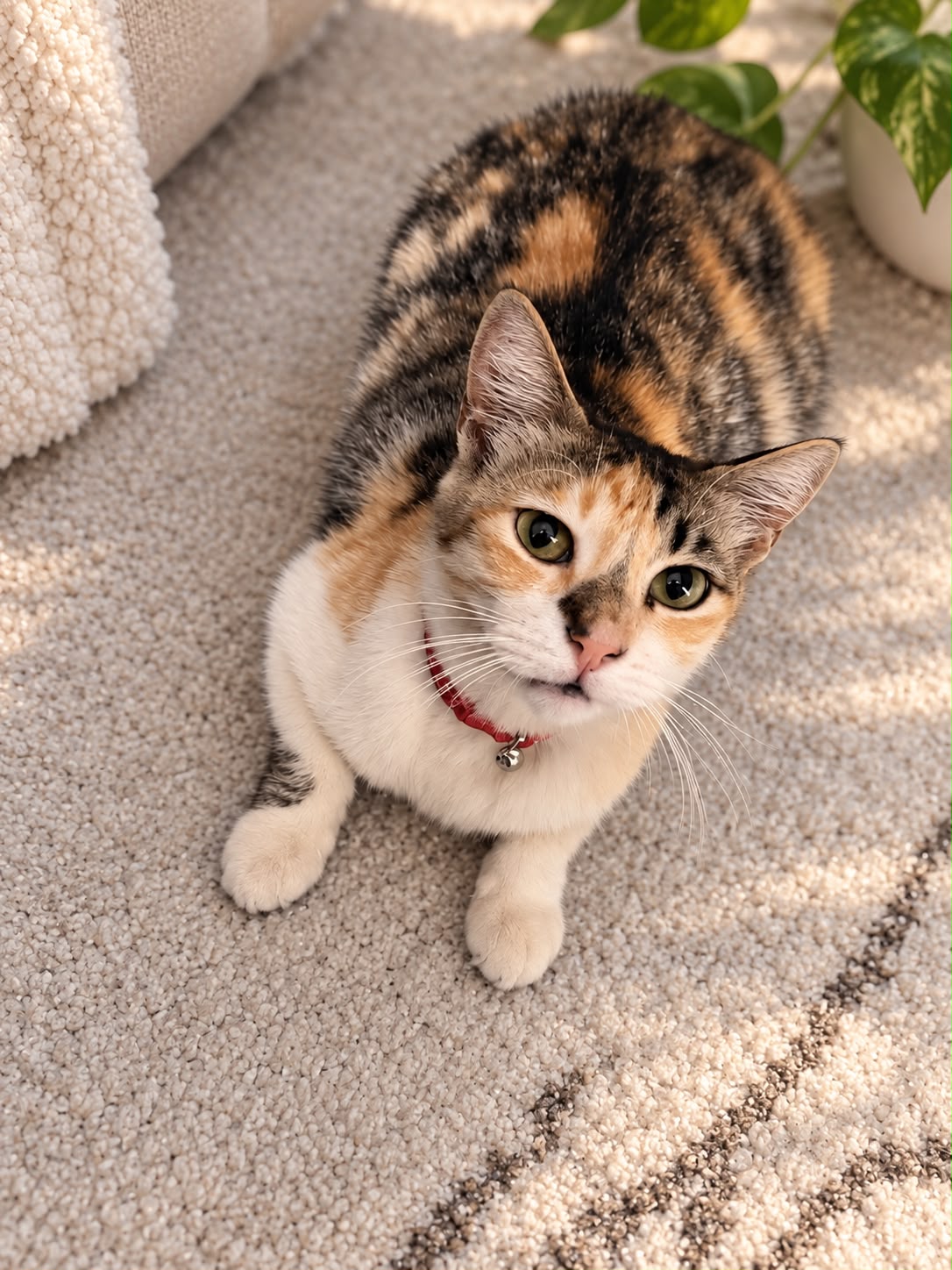
Animal Communication: When Connection Goes Beyond Words
Anyone who has ever deeply loved an animal knows that communication does not always require words.
You know the particular look your dog gives you when something feels wrong. You notice when your cat suddenly chooses to sleep beside you after a difficult day. You can sense excitement before the leash is even picked up, or recognize discomfort long before there is an obvious sign of what is causing it.
We often describe these moments as instinct, familiarity, or simply knowing our animals well. But animal communication explores a deeper question:
What if some of what we perceive is not simply observation, but a form of intuitive communication?
For many people, the idea of communicating with animals sounds mystical. For others, particularly those who have formed profound relationships with their pets, it feels surprisingly natural.
Animal communication is a practice centered around listening beyond spoken language, paying attention to impressions, emotions, images, sensations, and subtle information that may arise when connecting intentionally with an animal.
It is not about expecting an animal to speak in human sentences. It is about learning another way of listening.
What Is Animal Communication?
Animal communication, sometimes called intuitive animal communication or interspecies communication, is a practice in which a communicator attempts to connect intuitively with an animal.
Rather than relying solely on observable behavior, the communicator becomes receptive to information that may appear as feelings, mental images, physical sensations, words, memories, or simply a strong sense of knowing.
A communicator might, for example, receive an impression of a particular room, person, food, physical sensation, or emotional experience. The experience is often less dramatic than people imagine.
There is usually no audible voice saying, “Hello, I would like to discuss my childhood.”
Instead, communication may arrive as something subtle: an unexpected image, a sensation in the body, a sudden emotion, or a thought that seems to appear without deliberate effort.
The role of the communicator is to observe these impressions without forcing them into a predetermined story.
But Do Animals Actually Communicate With Us?
Animals are communicating all the time.
Scientifically, we know that animals use vocalizations, body language, scent, facial expressions, posture, movement, and behavioral patterns to communicate with members of their own species and with humans.
A dog standing beside the door may be asking to go outside. A cat slowly blinking may communicate comfort or trust. A frightened animal may change its posture long before making a sound.
Animal communication as a spiritual or intuitive practice goes beyond these observable signals. It proposes that humans may sometimes perceive information from animals through intuition or non-verbal awareness.
This aspect of animal communication remains outside established scientific consensus, and experiences are difficult to objectively verify.
For practitioners, however, the value of a session is not necessarily about proving a supernatural ability. It can be about creating a different kind of space in which we slow down, become more attentive, and consider an animal's experience from a perspective beyond our own.
Animals Experience the World Differently Than We Do
One of the most important principles of animal communication is surprisingly simple:
An animal is not a human in an animal's body.
We naturally interpret our pets through human emotions.
We may think:
“She is angry with me.”
“He is jealous of the new puppy.”
“She knows she did something wrong.”
Sometimes our interpretation may contain truth. But sometimes we are projecting a human story onto behavior whose meaning is entirely different.
Animals experience environments through their own senses, instincts, associations, and nervous systems. A behavior that looks like stubbornness may be fear. A sudden withdrawal may be discomfort.
Restlessness may relate to environmental changes that humans barely notice.
And sometimes what we interpret as sadness may simply be an animal asking for space. Animal communication invites us to become curious before deciding that we already know the answer.
Instead of asking only, “Why is my animal doing this?”
we begin asking,
“What might my animal be experiencing?”
That small shift can transform a relationship.
What Happens During an Animal Communication Session?
Every practitioner works differently, but a session generally begins with creating a quiet, receptive state.
The communicator focuses on the animal and allows impressions to arise without immediately analyzing them.
These impressions may include:
-
emotions or changes in emotional tone
-
visual images or symbolic scenes
-
physical sensations
-
preferences and dislikes
-
impressions related to people or other animals
-
memories or associations
-
reactions to changes in the home
-
feelings surrounding a particular situation
The guardian may also bring specific questions.
For example:
Are you comfortable in your new home?
Is something making you anxious?
How do you feel about the new animal in the family?
Is there something you need from me?
Why have you started behaving differently?
Is there something you want me to understand?
The communicator then shares what arises during the session.
Ideally, the information is offered as an impression rather than an unquestionable fact. Animal communication should create possibilities for understanding, not remove the guardian's judgment, observation, or responsibility.
Why Would Someone Speak With an Animal Communicator?
People seek animal communication for many different reasons.
Sometimes there is a behavioral change they cannot understand.
A previously affectionate cat becomes distant. A dog suddenly refuses to enter a certain room. Two animals who once lived peacefully begin reacting differently toward each other.
Sometimes the reason is practical.
A family may be moving house, introducing a new pet, welcoming a baby, traveling for an extended period, or changing the animal's routine.
And sometimes there is no problem at all.
A guardian may simply want to understand their companion more deeply.
What does my animal enjoy most?
What makes them feel safe?
How do they experience our relationship?
Is there something I misunderstand about them?
These questions reflect something many animal guardians eventually realize:
Living together does not automatically mean understanding each other completely.
Animal communication can become an invitation to listen again.
Can Animal Communication Help With Behavioral Problems?
It can offer another perspective, but it should not replace appropriate professional care.
Behavioral changes can have many causes.
Pain, illness, neurological changes, fear, stress, environmental triggers, inadequate enrichment, learned behavior, and changes in routine can all influence the way an animal behaves.
A sudden change in behavior should therefore be taken seriously, particularly when it is accompanied by changes in appetite, mobility, sleep, elimination, aggression, vocalization, or energy.
Veterinary assessment should come first when a medical cause may be possible.
Animal communication can exist alongside veterinary medicine and qualified behavioral support rather than competing with them.
Think of it as another lens.
A veterinarian examines health.
A qualified behavior professional evaluates behavior and environment.
An animal communicator explores the relationship from an intuitive perspective.
Each serves a different purpose.
What About Animals Who Have Passed Away?
This is perhaps one of the most emotionally significant reasons people seek animal communicators.
Losing an animal can create a particular kind of grief.
Our daily routines are intertwined with them, the sound of paws approaching, feeding times, sleeping arrangements, walks, small rituals, and the quiet presence of another living being sharing our home.
And when they are gone, the silence can feel enormous.
People may also carry questions.
Did they know how much I loved them?
Were they afraid?
Did I make the right decision?
Was there something they needed that I missed?
Some animal communicators offer sessions involving animals who have passed, based on spiritual beliefs about consciousness continuing beyond physical death.
There is currently no scientific method that can establish communication with a deceased animal as fact. For this reason, such experiences are best approached as spiritual and personal rather than medical or scientific certainty.
For some people, however, the ritual of intentionally connecting with an animal they loved can become part of processing grief, remembering the relationship, and saying what was never said.
Sometimes the question is not whether love disappeared.
It is how we learn to carry it differently.
Animal Communication Is Also About the Human
Interestingly, a session may reveal as much about the guardian as it does about the animal.
Animals live extraordinarily close to us.
They witness our routines, relationships, stress, grief, excitement, arguments, departures, and returns.
They respond to changes in the household even when nobody explains what is happening.
This does not mean that every animal behavior is caused by its guardian's emotional state.
But relationships are systems. When one part of a household changes, other members, including animals, may respond.
Animal communication can therefore encourage an uncomfortable but meaningful question:
Am I truly listening to my animal, or am I only looking for the answer I want to hear?
Real listening requires curiosity.
Sometimes what an animal seems to need may not match our expectations.
More stimulation.
More boundaries.
More quiet.
A different routine.
Less physical attention.
More independence.
Or simply permission to be an animal rather than the character we have unconsciously assigned to them.
The Quiet Intelligence of Animals
Humans often measure intelligence through language.
Because animals cannot explain their inner worlds using human vocabulary, we can easily underestimate the complexity of what they experience.
Yet anyone who lives closely with animals has probably witnessed moments that resist simple explanation.
They remember routines.
They anticipate events.
They recognize emotional shifts.
They form preferences and attachments.
They grieve.
They adapt.
And sometimes, they appear to understand far more about us than we realize.
Whether you understand animal communication spiritually, intuitively, psychologically, or simply as a practice of deeper attention, its central invitation remains the same:
Become quieter. Observe more carefully. Assume less. Listen more.
Perhaps communication with animals does not begin with learning how to make them speak.
Perhaps it begins when we stop expecting them to communicate like us.
A Different Kind of Conversation
Our relationships with animals are unusual because so much love exists without shared language.
We feed them, protect them, worry about them, sleep beside them, rearrange our lives around them, and eventually grieve them, often without ever hearing them say a single word.
And yet somehow, we understand each other.
Not perfectly.
But perhaps more than we think.
Animal communication explores the space between those two realities: what can be observed and what can only be felt.
You do not have to accept every spiritual explanation to become more curious about that space.
Sometimes the most meaningful question is simply:
If your animal could tell you one thing today, would you be willing to listen?
Explore Animal Communication at Madam Donna
An Animal Communication session at Madam Donna offers a reflective space to explore your connection with your animal companion through intuitive communication.
Whether you are navigating behavioral changes, transitions, emotional questions, curiosity about your animal's preferences, or the loss of a beloved companion, the session is approached with respect for both the animal and the human-animal bond.
Animal Communication is a complementary spiritual practice and is not intended to diagnose, treat, or replace veterinary care or professional animal behavior services.
Reserve Your Confidential Consultation
Protect your peace of mind and gain unvarnished clarity on your most private life dilemmas. Book an exclusive, discrete session with Madam Donna today.