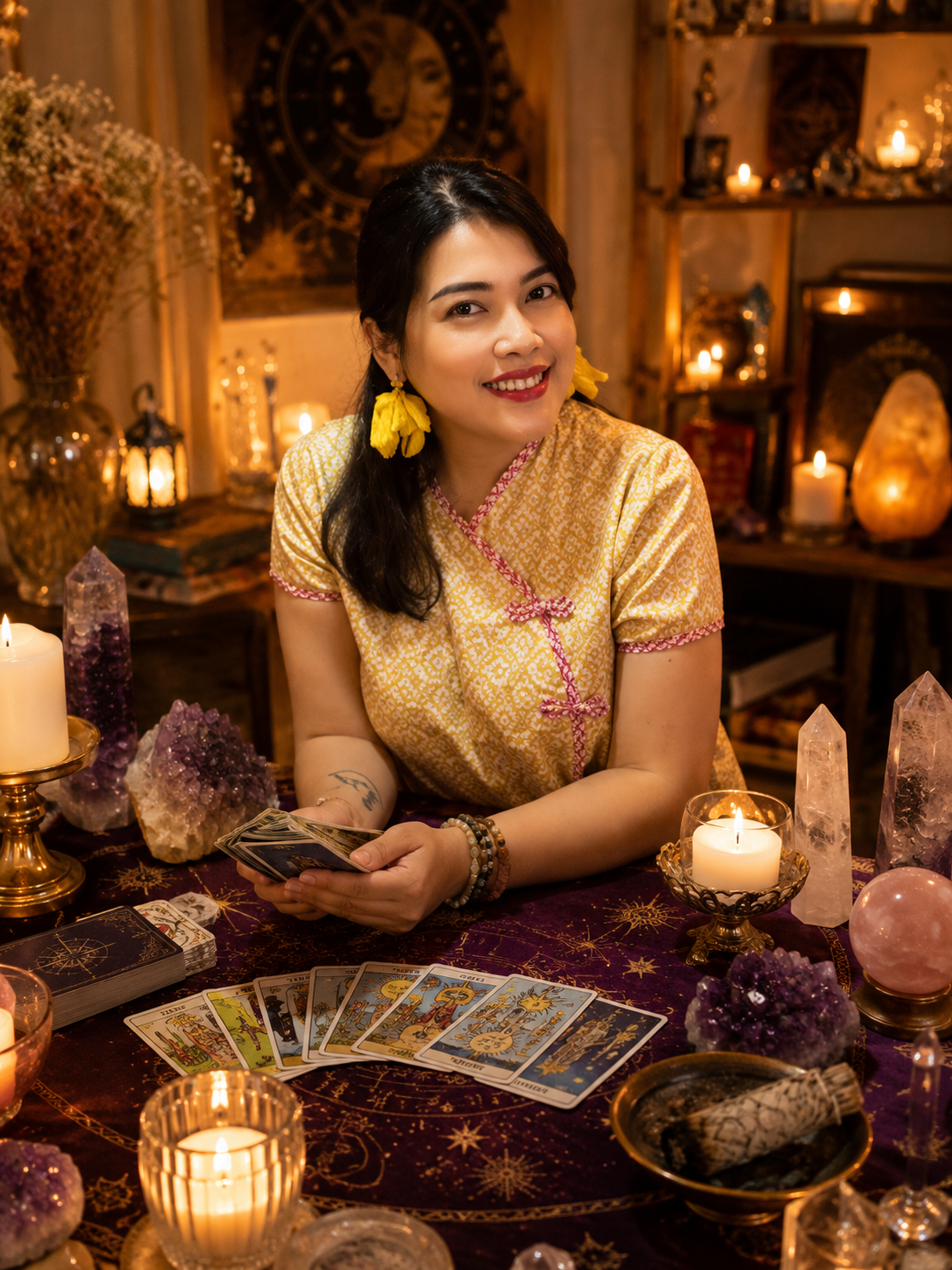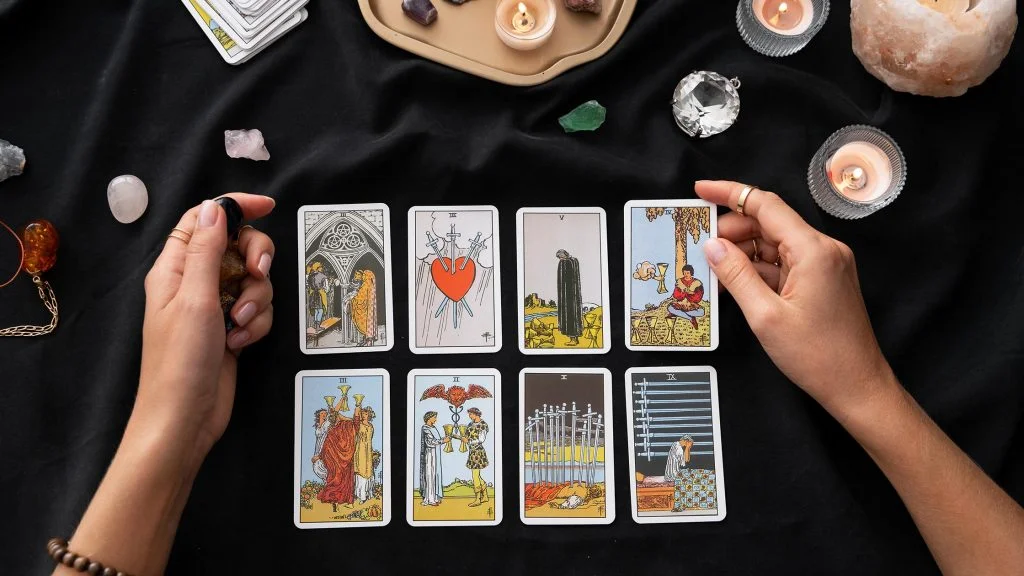
There is something irresistible about tarot.
You shuffle the cards with a question in mind. A few cards appear on the table, and somehow, an image or message seems to speak directly to something you have been feeling but couldn't quite put into words.
Love. Career. Money. Relationships. A difficult decision. The future.
For centuries, people have turned to symbolic and divinatory practices when facing life's uncertainties. Today, tarot reading remains popular not only within spiritual communities, but also across psychology-inspired self-reflection, art, popular culture, and even high fashion.
So, what is tarot reading? Why do so many people believe in tarot? And why can we become so attached to asking the cards for answers?
What Is Tarot Reading?
A traditional tarot deck contains 78 cards, divided into the Major Arcana and Minor Arcana. Each card carries imagery, symbols, characters, emotions, and archetypal themes:
- The Fool: Speaks of beginnings and stepping into the unknown.
- The Hermit: Invites introspection.
- The Lovers: Explores relationships, values, and choices.
- Death: Despite its intimidating name, often symbolizes endings, transition, and transformation.
During a tarot reading, cards are drawn and interpreted in relation to a person's question, circumstances, and the positions in which the cards appear. This is why tarot doesn't necessarily have to be approached as a fixed prediction of the future.
For many people, tarot is a tool for reflection and self-discovery. Instead of only asking, "What is going to happen?", tarot invites us to ask:
"What am I not seeing?"
Why Do People Believe in Tarot?
Human beings naturally search for meaning. When something feels uncertain particularly love, relationships, career, or major life decisions, we often want a story that helps us understand what is happening.
Tarot provides a symbolic language through which to explore those experiences:
- Sometimes a card describes an emotional dynamic we immediately recognize.
- Sometimes it challenges the story we have been telling ourselves.
- Sometimes it simply introduces a perspective we hadn't considered before.
You don't necessarily have to believe that tarot cards literally know your future to experience a meaningful reading. The real value comes from what the cards cause you to notice.
Perhaps the real question isn't always: "Is this prediction going to happen?" Rather, it is: "Why did this particular message affect me so deeply?"
Reserve Your Confidential Consultation
Protect your peace of mind and gain unvarnished clarity on your most private life dilemmas. Book an exclusive, discrete session with Madam Donna today.
Why Can Tarot Feel So Addictive?
Imagine asking tarot:
- Does this person still love me? (You receive an encouraging reading and immediately feel relieved.)
- A few days later, uncertainty returns: Will they contact me?
- Then: When will they contact me?
- And eventually: Are you sure?
This cycle helps explain why some people feel almost “addicted” to tarot readings. Uncertainty is emotionally uncomfortable, and receiving an answer temporarily creates a sense of certainty, reassurance, or control.
A healthy relationship with tarot leaves room for:
- Free will
- Personal responsibility
- Intuition and independent choice
The cards can offer another perspective, but they should never take your power away from you.
Tarot Is More Than Fortune-Telling
One reason tarot has remained culturally fascinating is that its imagery extends far beyond divination. The cards contain universal archetypes: the mother, the ruler, the lover, the wanderer, the teacher, destruction, rebirth, temptation, and hope.
Those symbols naturally lend themselves to storytelling, photography, art, design, and high fashion.
From Tarot Cards to Dior Couture
Christian Dior's relationship with mysticism was deeply personal. The legendary designer was known for his superstitions, lucky charms, and regular consultations with clairvoyants.
Decades later, that fascination found new creative expression under Dior creative director Maria Grazia Chiuri:
- Spring 2017 Collection: Debuted foundational tarot imagery on the runway.
- Resort 2018 Collection: Drew inspiration from the feminist Motherpeace Tarot created by Karen Vogel and Vicki Noble.
- Spring-Summer 2021 Haute Couture (Le Château du Tarot): Transformed major archetypes, such as The High Priestess, Justice, The Fool, Death, and The Devil, into wearable couture.
Here, tarot served as a visual language for creativity, offering rich characters, mystery, and transformative storytelling.
Why Tarot Still Fascinates Us
Its appeal doesn't belong exclusively to believers in fortune-telling:
- Some come to tarot looking for predictions.
- Others come for spiritual guidance.
- Many use it for journaling and self-reflection.
- Artists and designers view it as an extraordinary visual archive of archetypes.
At Madam Donna, tarot reading is viewed as an invitation to pause, reflect, and look at your situation from another perspective.
Instead of asking the cards to make decisions for you, their true magic lies in their symbols and stories, helping you hear what you already know within yourself.